Product
TimelineResearchLab dataDocument namingDesktop assessmentGuideline screening3D mapping and volumesGroundwater trendsEnvironmental forensicsReports, tables and figuresSite FactsPortfolio prioritization
Solutions
Site owners & operatorsConsultantsEnvironmental lawyers Use cases Industries
Offerings
PlatformExpert servicesPortfolio programs
Resources
Case studiesGlossaryBlogEnviroBench
Trust Company Contact us

Latest posts

Is the Contamination Getting Better or Worse? Timeline Answers the Question Regulators Always Ask

Twelve sampling events, three service providers, three report formats. How Statvis Timeline turns fragmented snapshots into a clear contamination trend.

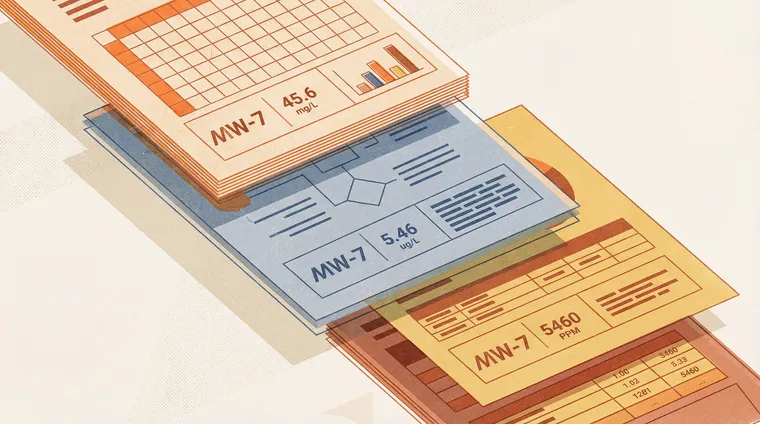
Connecting Reports, Maps, Boreholes, and Data Into One Story

One site, ten years of reports, six consultants, dozens of boreholes. How Statvis connects fragmented site data into a single, navigable story.

Can You Trust AI With Confidential Environmental Site Data?

Anthropic's September 2026 threat report surfaced a question every environmental professional should be asking: what actually happens to your data inside an AI system?

What It Takes to Set the Industry Benchmark for AI in Contaminated Site Work

Environmental AI has to meet a higher evidentiary standard than most domains. Here is what that benchmark standard looks like and how Statvis is establishing it.

Stop Searching Through Reports: Ask Your Documents Questions Instead

Your organization has invested decades building environmental knowledge. Here's what changes when you can query your documents directly.

Making Years of Project Knowledge Available in Seconds

Environmental work generates decades of documents. The answers are already there. Statvis surfaces the answers necessary for your sites, in minutes, not weeks, years or decades.

The Knowledge That Never Made It Into the Report

Your site files hold what was found. The reasoning behind those findings usually lives in someone's head. Here is how to capture it before it leaves.

Why Every Environmental Professional Needs a Purpose-Built Digital Sidekick

Environmental professionals can use technology to surface the right information faster. Statvis acts as a digital sidekick for practitioners to find more complete answers that are necessary to make sound decisions.

Moving Beyond Data Management to Knowledge Management

Data quantity does not equate to data quality when it loses context. Statvis transforms collections of environmental documents into actionable knowledge for contaminated site portfolios.

Introducing Statvis: A New Way to Understand Environmental Data

Environmental data currently lives in files that require time to read. Statvis turns complex project information into clear, cited narratives that support faster contextual understanding and better decision making.

Beyond the AI Hype: Creating Real Value for Environmental Professionals

AI in environmental work is eliminating the manual workload of data aggregation that keeps practitioners from solving the hard problems and providing expert opinions on the data.

Why Semantic Search Changes Document Intelligence

Semantic search understands what you're asking, not just the words you use. Here's why that matters when you're searching through thousands of environmental documents.

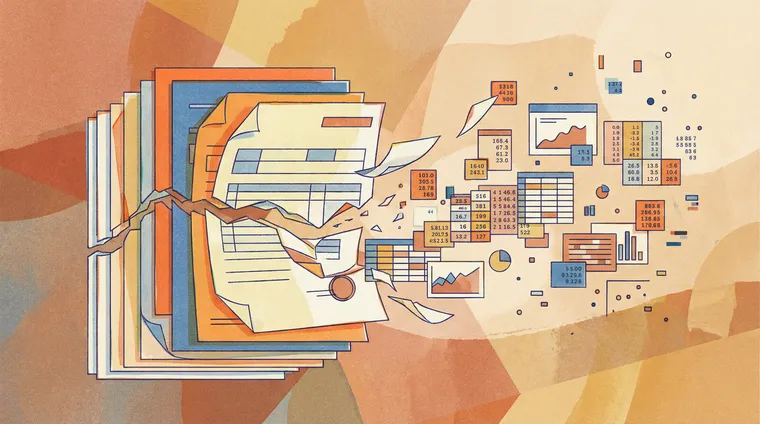
When Excel Doesn't Match the Report: Finding Data Inconsistencies Across Documents

Column shifts, transposition errors, and transcription mistakes accumulate as data moves from lab certificates to reports to spreadsheets—and traditional QA/QC doesn't catch them.

When QA/QC Passes Bad Data: Using Machine Learning to Identify Laboratory Errors

Two case studies where UMAP and HCA identified bad data that passed traditional QA/QC and external validation—including fictitious PCB results used for over two years.

Is Your Lab Data Valid?

Passing QA-QC doesn't make data defensible. If you can't trace it back to source documents, you have numbers without context.

Litigation Memory: When Cases Last Longer Than Careers

Environmental litigation spans years, often decades. Superfund cases involve hundreds of parties and tens of thousands of documents. When the case restarts after dormancy, institutional memory becomes the difference between efficiency and expensive reconstruction.

From Data to Documents: The Next Chapter

You've seen what we can do with data. Now see what we're doing with documents—and why traceability matters when institutional memory is on the line.

Context Rot and the Game of Telephone: Why AI Summaries Degrade Over Time

Every time you summarize information, you lose something. With AI, that loss compounds fast. Here's why citations matter more than you think.

Weeks of work, days of time

Environmental lawyers receive boxes of documents in response to information requests. The data they need is buried somewhere inside. Now they just have to find it—in days, not weeks.

LegalTech Is Panicking About Claude Cowork. We're Not.

Anthropic's new plugins spooked legal software stocks. Here's why document intelligence for contaminated sites is a different problem entirely.

Statvis AI: From Data Platform to Knowledge Platform

We've invested deeply in AI-first infrastructure. Here's what that means for environmental site management.

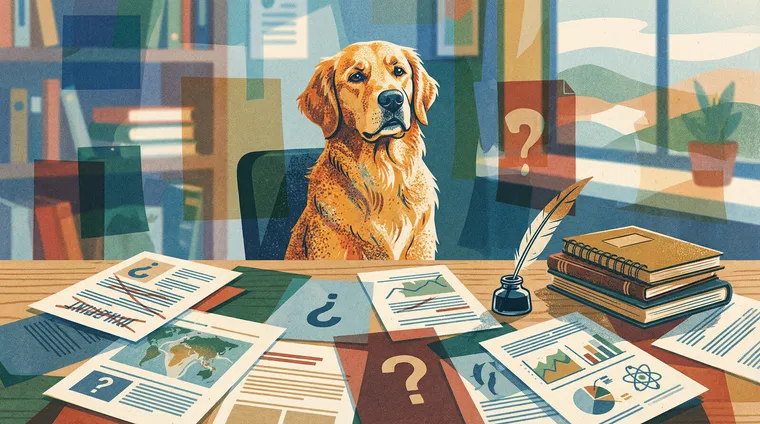
The Golden Retriever Problem: When AI Wants to Please You Too Much

We asked an AI to verify its sources. It admitted it made them up to 'look credible.' Here's why that happens—and how citations should actually work.

Why You Can't Just Drag PDFs Into ChatGPT: A Primer on RAG and Why Most Search Systems Miss What Matters

An explanation of how AI document search actually works, why 'just upload your PDFs' falls short for serious research, and what exhaustive search means.

Seven Thousand Pages: Why ChatGPT Can't Replace Real Document Intelligence

We're working on an EPA Superfund site with a 7,000-page PDF. Here's why consumer AI tools can't handle serious document work—and what actually can.

When a Big Four Firm Got Caught Hallucinating: Lessons from a $2 Million AI Disaster

A law professor discovered fabricated citations in a Big Four consulting report. Here's what went wrong and how proper document intelligence prevents it.

Site History: The Foundation of Environmental Liability

Environmental liability often belongs to whoever controlled the site when contamination occurred. Building defensible site history from thousands of documents requires a new approach.

Why You Need to Standardize Your PCB Data Analytics

Discover how standardized PCB analysis workflows deliver effortlessly interactive insights compared to spreadsheet-based approaches.

Top 10 Reasons to Impute

Why statistical imputation outperforms the traditional half-detection-limit substitution for environmental datasets with non-detect values.

Why You Need to Fingerprint PAHs

Determine whether measured PAHs originate from suspected sources or alternative ones using forensic fingerprinting analysis.

Why You Need to Move Beyond Environmental Guidelines

Contaminated sites professionals need reliable data and systems to reveal patterns they haven't seen yet to restore land to productive use.

Why Good Science Alone Isn't Enough

Environmental data needs to be visualized to be effectively communicated. Good science is only complete when anyone can understand it.

We Are So Excited to Share

New tools for environmental data analysis coming soon. Interact and explore your data with the tools used by experts.

Statvis Invented a New Interpolation Technique

Introducing automated interpolation based on sample similarity rather than just concentration thresholds for environmental plume delineation.

Quick Mapping and Custom Shapefile Layers

Find sample locations worldwide and add custom property boundaries with Statvis's geospatial analysis tools.

Now You Can Solve Complex Environmental Challenges from Anywhere

Work on PCB and PAH chemical fingerprinting analysis from anywhere with Statvis's cloud-based environmental data portal.

Dioxin Data Is a Good Investment

Get valuable insights from dioxin fingerprinting in a user-friendly way. Compare histogram plots and pinpoint potential PCDD/F sources.

Introducing the Dioxin Source Finder

A forensic tool to identify potential dioxin contamination sources by comparing samples against a peer-reviewed reference library.

Introducing Dioxin Fingerprinting

Upload dioxin data and compare histogram plots to identify similarities with reference samples and determine potential PCDD/F sources.

How Many Sources of PAHs Are There at Your Project Site?

Discover how to identify multiple PAH contamination sources using forensic fingerprinting and diagnostic ratio analysis.

Heat Mapping and Dark Mode Just in Time for Halloween

Introducing night mode visualization with high-contrast displays that make your contamination data stand out with a ghostly glow.

Do You Analyze for PAHs? You Need to Be Doing This

Learn the fundamentals of PAH fingerprinting and how to interpret your PAH data using our online forensic analysis portal.

Calculated Aroclors from PCB Congeners

Upload congener data and generate PCB histograms quickly with consistent, exportable results for your reports.

Battelle Sediment Conference 2025

Join us at Battelle Sediment Conference 2025 in Tampa for our poster on PCB congener data and Aroclor analysis.

Visual Learner? Statvis Is Here for You

Data exploration needs to be easy. Statvis enables simultaneous geospatial, trend, and fingerprinting analysis with just a few clicks.

Statvis Updates - October 2023

Interface improvements including consolidated map controls, PAH fingerprinting updates, and enhanced data filtering.

If Data Is the New Oil, Many Companies Have Given Up Their Mineral Rights

Companies often lose practical control of their environmental data to consultants and contractors, shifting from owner to client status.

Take control of your contaminated sites.

Bring us one site's documents. We'll show you what's in them.