Why Semantic Search Changes Document Intelligence
Semantic search understands what you're asking, not just the words you use. Here's why that matters when you're searching through thousands of environmental documents.
Insights
On AI reliability, document intelligence, and what it takes to build defensible evidence from messy archives.
Semantic search understands what you're asking, not just the words you use. Here's why that matters when you're searching through thousands of environmental documents.
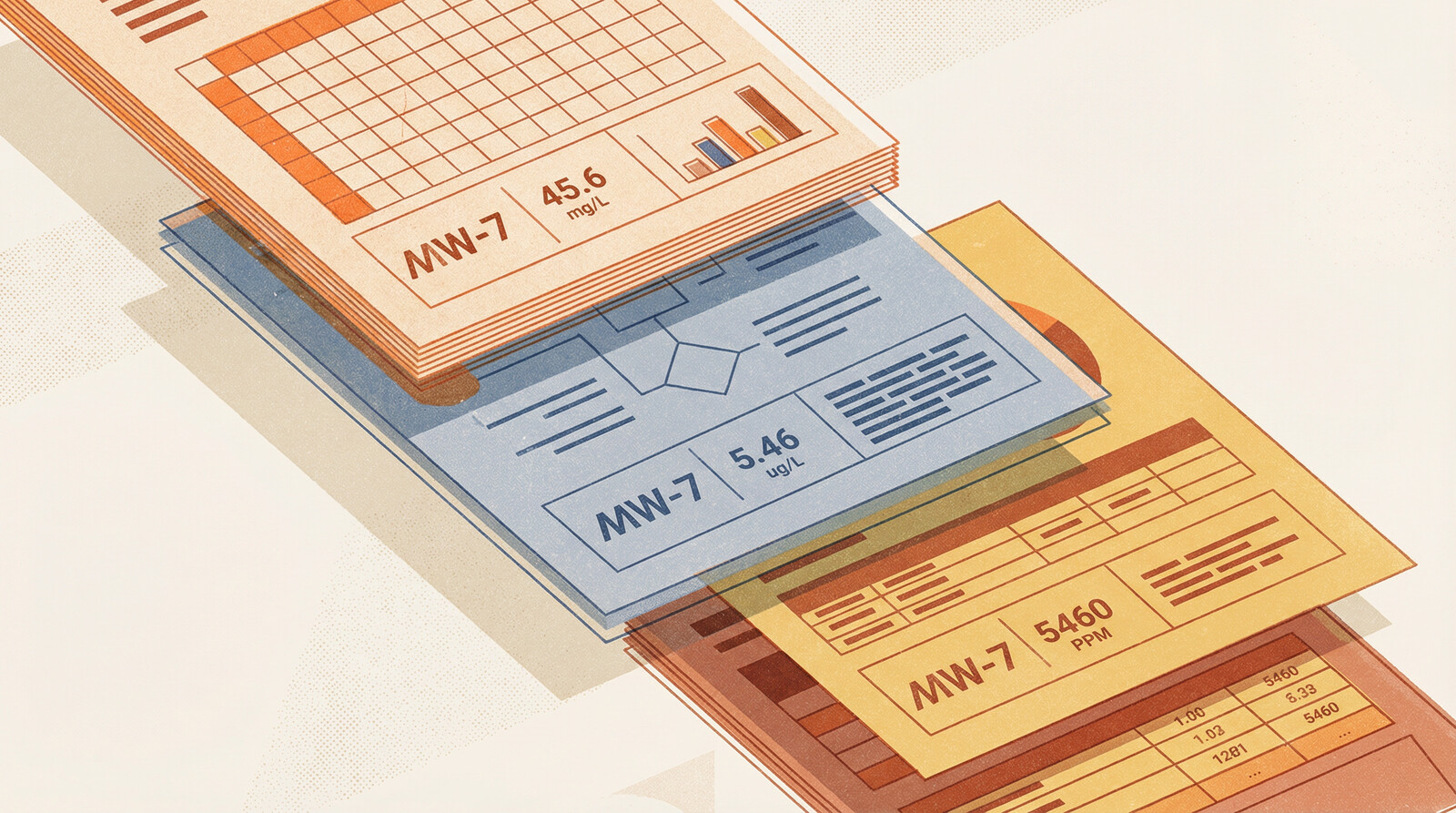
Column shifts, transposition errors, and transcription mistakes accumulate as data moves from lab certificates to reports to spreadsheets—and traditional QA/QC doesn't catch them.
Two case studies where UMAP and HCA identified bad data that passed traditional QA/QC and external validation—including fictitious PCB results used for over two years.
Passing QA-QC doesn't make data defensible. If you can't trace it back to source documents, you have numbers without context.
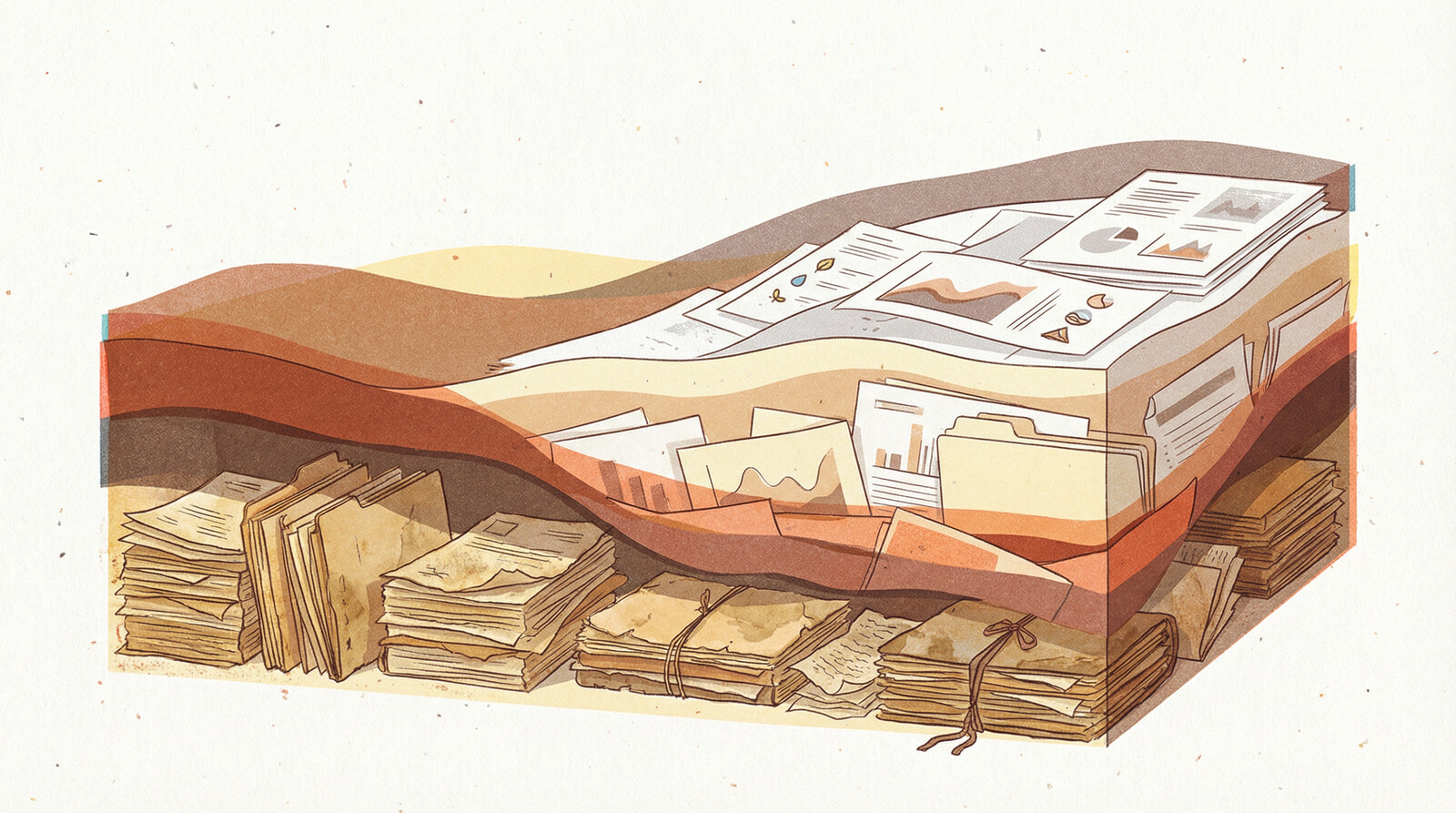
Environmental litigation spans years, often decades. Superfund cases involve hundreds of parties and tens of thousands of documents. When the case restarts after dormancy, institutional memory becomes the difference between efficiency and expensive reconstruction.
You've seen what we can do with data. Now see what we're doing with documents—and why traceability matters when institutional memory is on the line.
Every time you summarize information, you lose something. With AI, that loss compounds fast. Here's why citations matter more than you think.
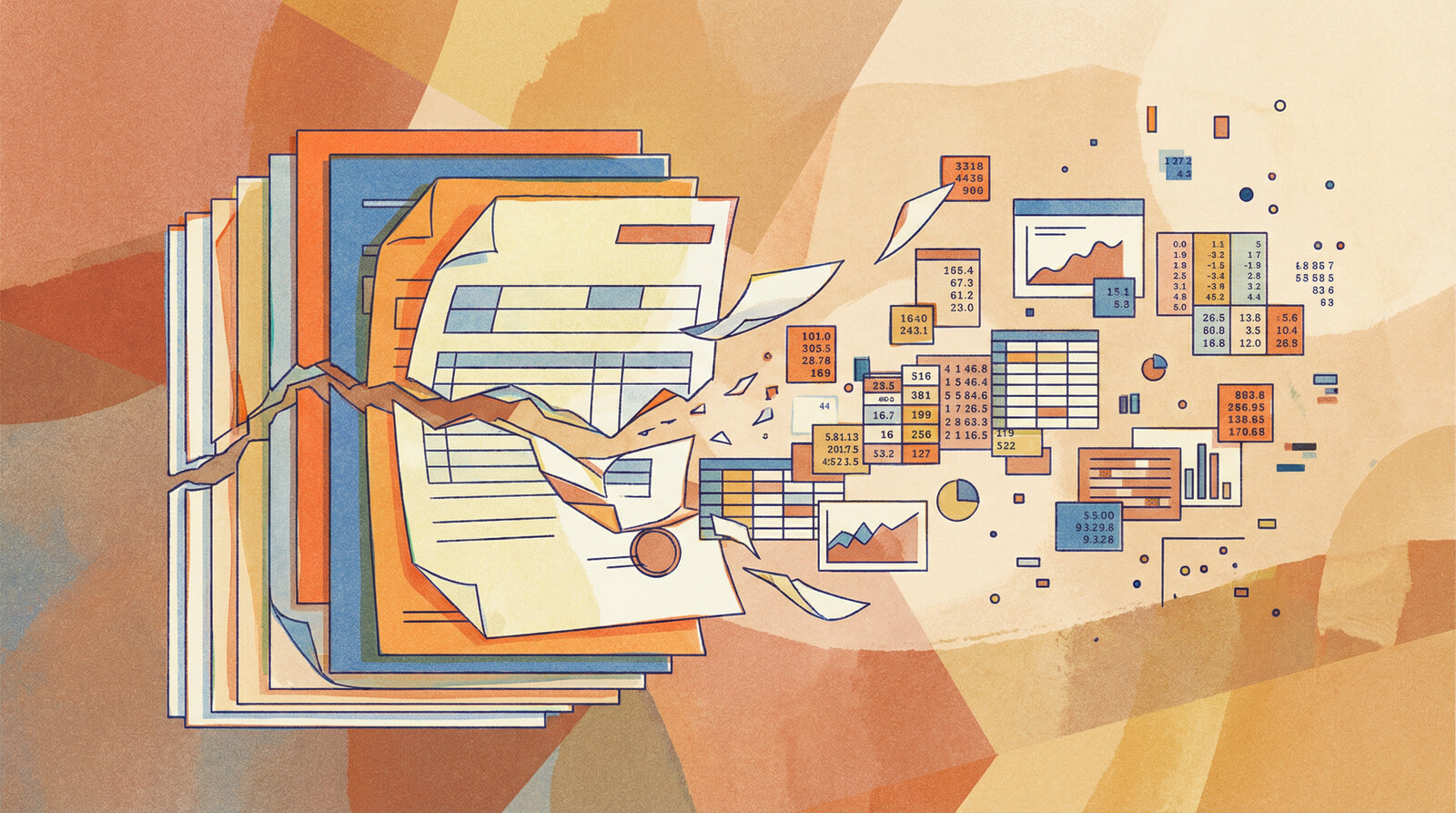
Environmental lawyers receive boxes of documents in response to information requests. The data they need is buried somewhere inside. Now they just have to find it—in days, not weeks.
Anthropic's new plugins spooked legal software stocks. Here's why document intelligence for contaminated sites is a different problem entirely.
We asked an AI to verify its sources. It admitted it made them up to 'look credible.' Here's why that happens—and how citations should actually work.
An explanation of how AI document search actually works, why 'just upload your PDFs' falls short for serious research, and what exhaustive search means.
We're working on an EPA Superfund site with a 7,000-page PDF. Here's why consumer AI tools can't handle serious document work—and what actually can.
A law professor discovered fabricated citations in a Big Four consulting report. Here's what went wrong and how proper document intelligence prevents it.
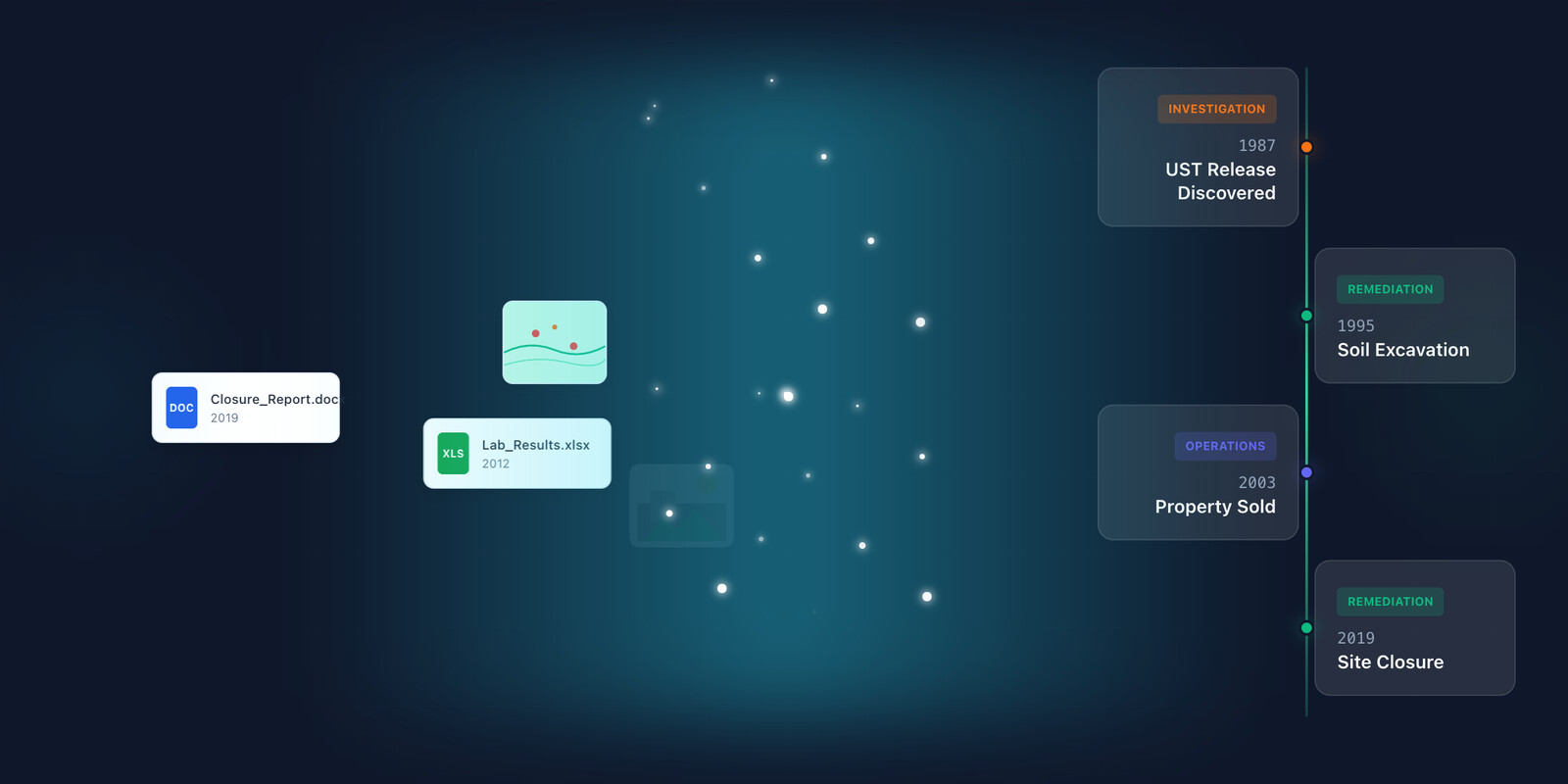
Environmental liability often belongs to whoever controlled the site when contamination occurred. Building defensible site history from thousands of documents requires a new approach.
Discover how standardized PCB analysis workflows deliver effortlessly interactive insights compared to spreadsheet-based approaches.
Previous posts
Why statistical imputation outperforms the traditional half-detection-limit substitution for environmental datasets with non-detect values.
Determine whether measured PAHs originate from suspected sources or alternative ones using forensic fingerprinting analysis.
Contaminated sites professionals need reliable data and systems to reveal patterns they haven't seen yet to restore land to productive use.
Environmental data needs to be visualized to be effectively communicated. Good science is only complete when anyone can understand it.
New tools for environmental data analysis coming soon. Interact and explore your data with the tools used by experts.
Introducing automated interpolation based on sample similarity rather than just concentration thresholds for environmental plume delineation.
Find sample locations worldwide and add custom property boundaries with Statvis's geospatial analysis tools.
Work on PCB and PAH chemical fingerprinting analysis from anywhere with Statvis's cloud-based environmental data portal.
Get valuable insights from dioxin fingerprinting in a user-friendly way. Compare histogram plots and pinpoint potential PCDD/F sources.
A forensic tool to identify potential dioxin contamination sources by comparing samples against a peer-reviewed reference library.
Upload dioxin data and compare histogram plots to identify similarities with reference samples and determine potential PCDD/F sources.
Discover how to identify multiple PAH contamination sources using forensic fingerprinting and diagnostic ratio analysis.
Introducing night mode visualization with high-contrast displays that make your contamination data stand out with a ghostly glow.
Learn the fundamentals of PAH fingerprinting and how to interpret your PAH data using our online forensic analysis portal.
Upload congener data and generate PCB histograms quickly with consistent, exportable results for your reports.
Join us at Battelle Sediment Conference 2025 in Tampa for our poster on PCB congener data and Aroclor analysis.
Data exploration needs to be easy. Statvis enables simultaneous geospatial, trend, and fingerprinting analysis with just a few clicks.
Interface improvements including consolidated map controls, PAH fingerprinting updates, and enhanced data filtering.
Companies often lose practical control of their environmental data to consultants and contractors, shifting from owner to client status.