Fingerprinting Unlocks a Faster and More Economical Path to Regulatory Closure for Sour Gas Plant
Challenge
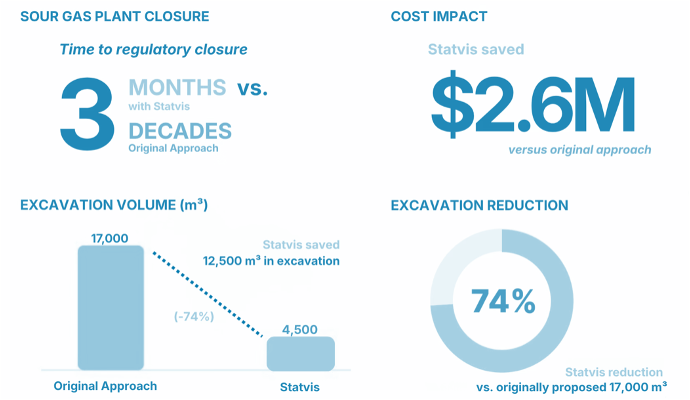
A sour gas plant closure was headed toward a plan requiring years of additional soil and groundwater sampling, with 17,000 m³ of soil recommended for excavation under the originally proposed scope.
Approach
Statvis reviewed salinity fingerprinting data across the site's historical documentation and used it to highlight naturally occurring background concentrations, supporting an adjustment to the regulatory guidelines being applied to the closure.
Result
With the revised, defensible guidelines in place, the site met closure criteria with only 4,500 m³ of excavation which was 74% reduction from the originally proposed volume of 17,000 m³ by prior remediation plans provided. In addition, the regulatory closure plan was approved in under 12 weeks instead of years. The adjustment saved an estimated $2.6 million against the original scope, with reduced excavation and eliminating years of previously recommended additional sampling. This opportunity illustrates a broader point: the historical documentation already on file was the best record of the site's conditions. Statvis being able to parse the documents and data more effectively makes the difference between a multi-million dollar decades long remedial plan and a swift well-supported one.